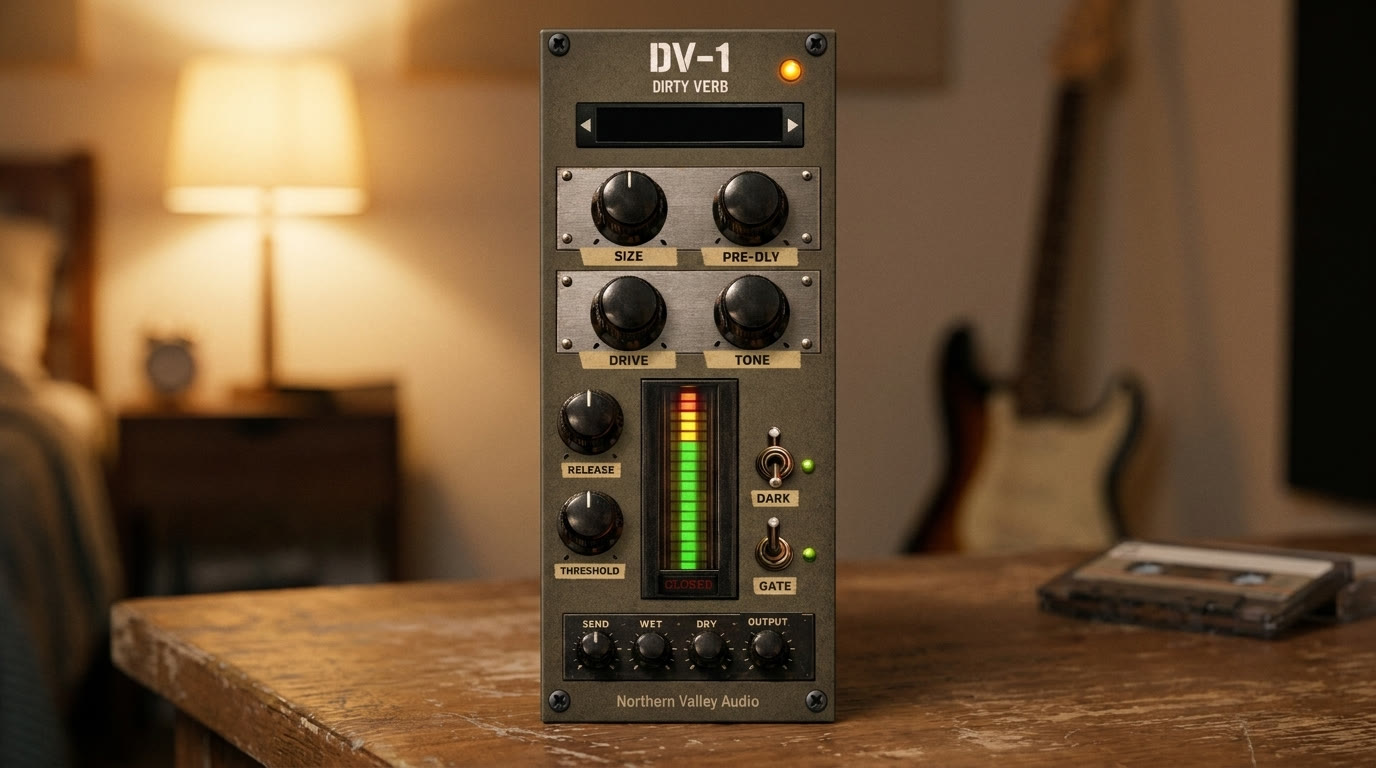
Gated reverb is a reverb whose tail gets cut off instead of fading out. You hear the bloom, the size, the drama of a big reverb, and then it stops. On drums that chop is what made the 80s sound like the 80s. On guitar it is quieter about its presence, but it is doing a lot of work on modern indie records: the reverb feels enormous while a phrase rings, then the mix snaps clean the instant the phrase ends.
The reason to care is mix space. A big reverb sounds great on a solo guitar and terrible in a busy chorus, because the tail smears over everything that comes after it. A gate solves the argument. You keep the size, you lose the wash.
The classic way: a gate on a timer
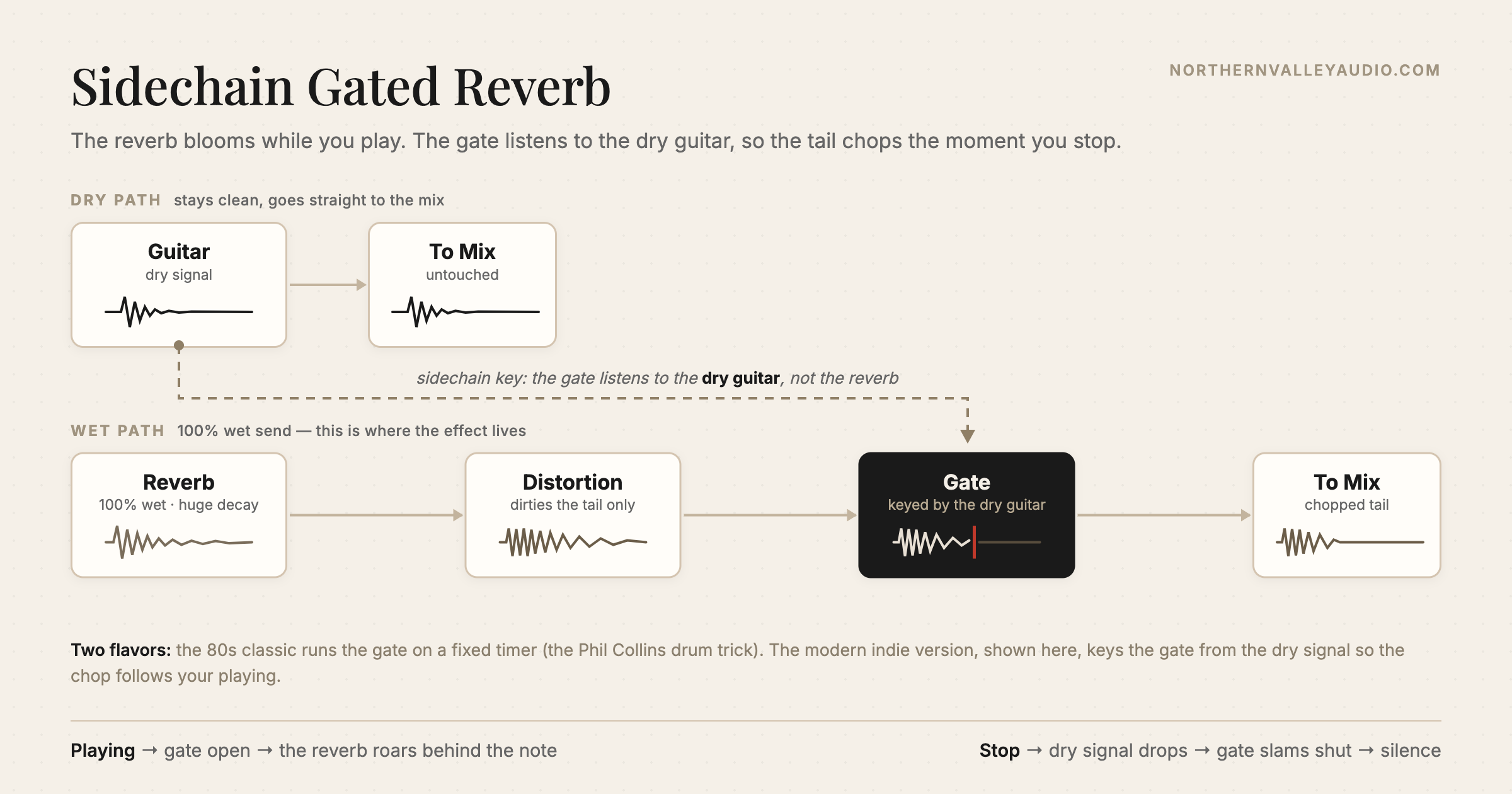
The original gated reverb, the Phil Collins drum sound, is a big room or plate reverb followed by a noise gate with a fixed hold time. Every hit opens the gate, the reverb roars for a set number of milliseconds, and then the gate slams shut mid-decay. The cut happens at the same point every time, which is why 80s gated drums feel so rhythmic and mechanical. The chop itself becomes part of the groove.
You can do this on guitar, and for staccato rhythm parts it works fine. But guitar phrases are not drum hits. Notes ring, phrases overlap, and a fixed timer either cuts tails you wanted or leaves tails you did not. That is where the modern version comes in.
The modern way: key the gate from the dry signal
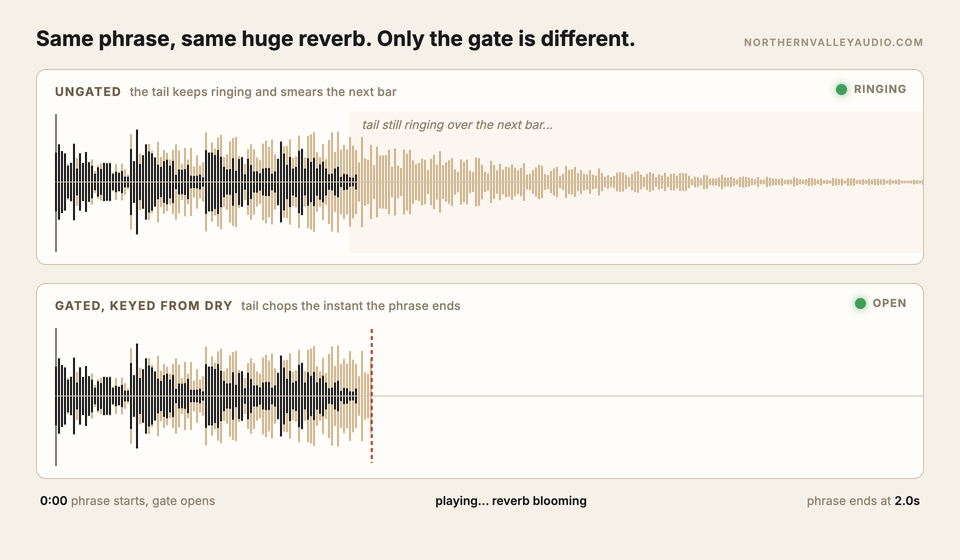
Instead of a timer, set the gate's sidechain input to listen to the dry guitar, not the reverb. Now the logic changes completely. While you are playing, the gate is open and the reverb blooms behind you. The moment you stop, the dry signal drops, the gate closes, and the tail vanishes. The reverb follows your playing like a shadow.
This is the sound on a lot of current indie and alternative guitar records. It reads as "huge but tight," which is not something reverb normally gets to be. It also has a musical side effect: because the tail cuts when you stop, you can run far more reverb than would otherwise survive a mix, including reverb that is distorted or degraded into something nastier and more interesting.
Build it in any DAW
You need three things: a reverb, a gate with a sidechain input, and a routing that keeps the dry signal untouched. Most stock DAW gates can do this.
Sidechain gated reverb, step by step
- Send, don't insert. Create a return track with a reverb set to 100 percent wet, and send your guitar to it. Your dry track stays clean.
- Gate the return. Put a noise gate after the reverb on the return track.
- Key it from the dry guitar. Set the gate's sidechain input to the dry guitar track. This is the step people miss. The gate should listen to your playing, not to the reverb.
- Starting settings: threshold just above the track's noise floor, attack as fast as it goes, hold 50 to 150 ms, release 20 to 80 ms. Longer hold and release feels smoother; shorter feels choppier.
- Optional, recommended: put a distortion or saturation plugin between the reverb and the gate. Only the tail gets dirty, and the dry note stays clean on your source track.
Big decay times are your friend here, 4 to 10 seconds, sizes you would never get away with ungated. The gate is doing the mix hygiene, so let the reverb be dramatic.
Dirty tails: the other half of the modern sound
Chopping the tail is half the trick. The other half on modern records is that the tail itself is often degraded: driven into distortion, bit-reduced, darkened, run through something that makes it sound like a memory of a reverb rather than a nice studio plate. Because the dry note stays clean, you can push the wet path surprisingly hard before it reads as "distorted guitar." It just reads as texture.
If you are building this from scratch, put the dirt after the reverb and before the gate, on the return track only. Distorting before the reverb smears the drive into the tail and sounds like a fuzz pedal in a big room, which is a different (also good) thing.
Or do it on one insert
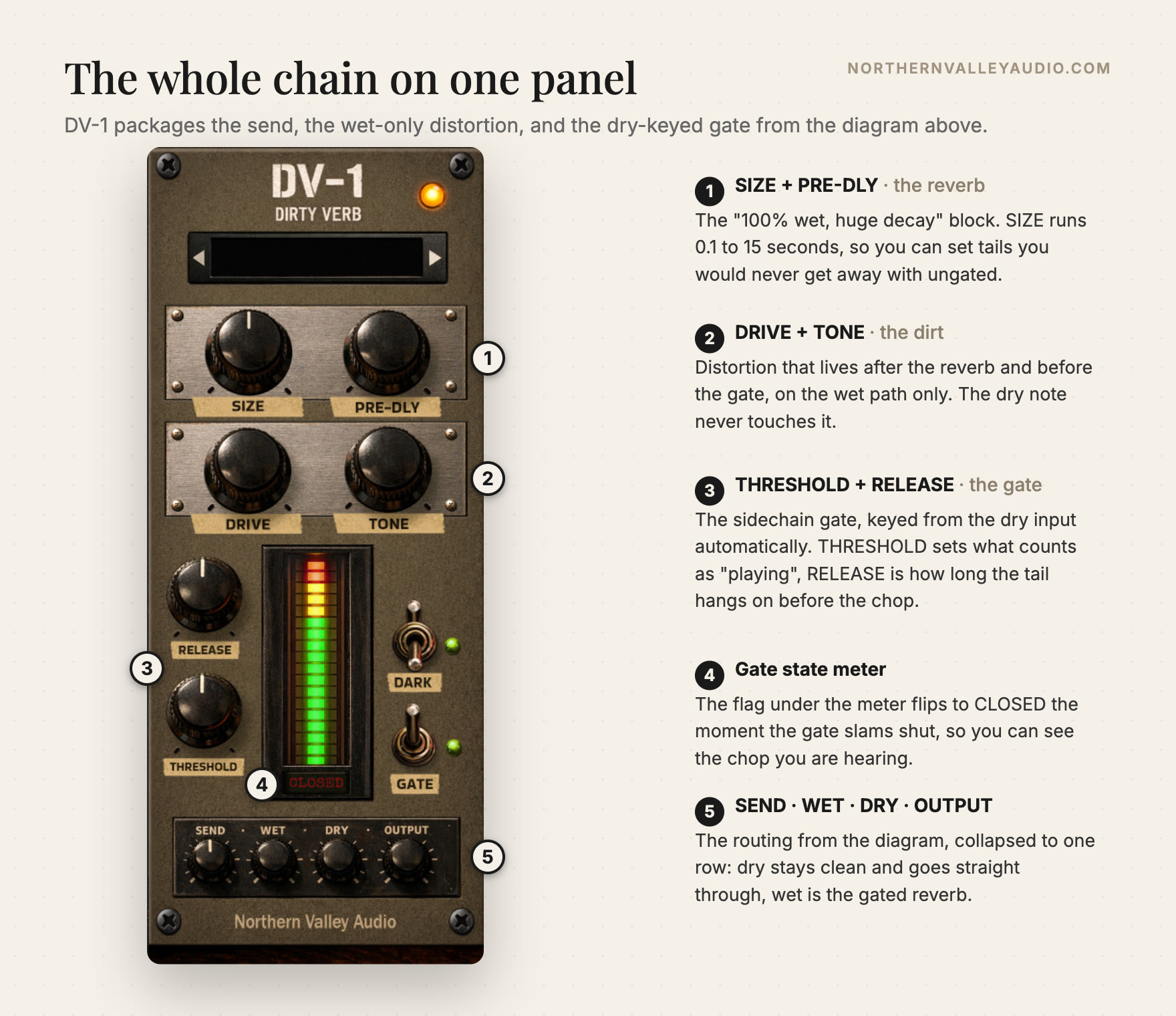
We make a plugin that packages this exact chain, because routing a send, a gate, a sidechain key, and a wet-path distortion for every track gets old. DV-1 is a gated dirty reverb on a single insert: the reverb, a distortion stage that runs only on the wet tail, and a gate that keys itself from the dry input automatically. There is also a lo-fi stage inside the reverb path for the degraded-chip texture, and an expression send for swelling the reverb in and out.
Starting points, straight from DV-1's factory presets
- The modern indie chop ("Gated Burp"): SIZE 0.5 s, DRIVE around 7, THRESHOLD -30 dB, RELEASE 350 ms. Tight, aggressive, tail turns to grit.
- Post-punk murk ("Cold Wire"): SIZE 1.5 s in dark mode, PRE-DLY 40 ms for that detached feel, light drive, RELEASE 400 ms.
- 80s hard gate ("Gated Slap"): SIZE 0.5 s, THRESHOLD up at -25 dB so only real hits open it, RELEASE 200 ms. The most drum-machine of the three.
The same numbers translate to any DAW gate: threshold just above your playing's noise floor, hold in the 200 to 400 ms range, and let the reverb itself be bigger than feels reasonable.
The DAW routing above gets you the same fundamental behavior with stock plugins, and we would genuinely rather you understand the routing than treat any plugin as magic. The plugin earns its place on speed: one insert, keyed correctly out of the box, dirt in the right spot.
The chopped, dirty reverb in one plugin
DV-1 is a gated dirty reverb: sidechain-chopped tail, distortion on the wet only, lo-fi texture inside the reverb path. VST3, AU, and Standalone for Mac and Windows. $24, one-time, lifetime updates.
Hear DV-1Frequently asked questions
What is gated reverb?
A reverb whose tail is cut off by a noise gate instead of decaying naturally. You hear the bloom, then it stops. The 80s version cuts after a fixed time. The modern version keys the gate from the dry signal, so the reverb chops the moment you stop playing.
How do I set up gated reverb in my DAW?
Send the guitar to a 100 percent wet reverb return, gate the return, and set the gate's sidechain to listen to the dry guitar track. Fast attack, hold around 50 to 150 ms, fast release. Tune the hold and release to the tempo and feel of the part.
What songs use gated reverb?
In the Air Tonight is the canonical drum example, and the sound defined 80s drums generally. On guitar, listen for modern indie records where a huge reverb sits behind a phrase and disappears the instant the phrase ends. Once you notice the chop, you hear it everywhere.
Should the distortion go before or after the reverb?
For the modern dirty-tail sound, after the reverb and before the gate, on the wet path only. That keeps the dry note clean while the tail degrades. Distortion before the reverb is a different sound, closer to a fuzz in a big room.
Is there a plugin that does this in one step?
Yes, that is what DV-1 is: reverb, wet-only distortion, and a dry-keyed sidechain gate on a single insert, plus a lo-fi stage and an expression send.
For the wider context on this style of guitar production, our indie guitar chain guide walks the full signal path, and the modern indie tone settings guide covers the pitch and tape side of the sound. If you want ready-made amp tones to put in front of the reverb, browse the dream pop and shoegaze preset settings.